
SSC and Equivalent Exam Results 2026
The results of this year’s SSC and equivalent examinations will be published on Monday, 10 August. Along with the existing 16222 SMS number, a new number, 16140, has also been introduced for students to check their results via mobile phone.

According to a notice issued by the Dhaka Education Board on Saturday, students will be able to access their results online and through SMS from 10:00 AM on 10 August.
To check the result via SMS, go to the messaging option on your mobile phone and type:
SSC <space> First 3 letters of Board <space> Roll Number <space> 2026
Send the message to either 16222 or 16140.
Example:
SSC DHA 113456 2026
Send the message to 16222 or 16140 to receive the result.
Students will also be able to check their results through the respective education board websites. In addition, results will be available on the two central websites: eduboardresult.gov.bd and educationboardresults.gov.bd.

This year’s SSC and equivalent examinations began on 21 April. The written examinations under the general education boards concluded on 20 May, while the written portions of the Dakhil and SSC (Vocational) examinations ended on 24 May.
SSC and equivalent examination results are generally published within 60 days of the completion of the written examinations. Accordingly, the results were expected to be released around 20 July. However, the education boards are set to publish this year’s SSC results nearly three weeks later than the expected schedule.
A total of 1,857,344 students completed the registration process to participate in this year’s SSC and equivalent examinations. Of them, 1,418,398 students were registered for the SSC examination under the nine general education boards, 304,286 students for the Dakhil examination under the Madrasa Education Board, and 134,660 students for examinations under the Technical Education Board.
According to board sources, students can check their results via SMS using a mobile phone with any SIM operator. To do so, go to the messaging option and type SSC, followed by a space, the first three letters of the education board, the roll number, and then YEAR. The message should be sent to 16140. The result will be delivered through a return SMS.
For students under the Dhaka Education Board, the SMS format will be:
SSC DHA ROLL YEAR
Students under the Madrasa Education Board who appeared for the Dakhil examination should send:
SSC MAD ROLL YEAR
Meanwhile, candidates under the Technical Education Board should use:
SSC TEC ROLL YEAR
All messages should be sent to 16140.
A charge of Tk 1.39 per SMS will apply. This charge includes all applicable taxes.
Australia Work Visa 2026 New Skills in Demand
Australia has officially revamped its migration system in 2026 to address critical labor shortages across the country. With the introduction of the Skills in Demand Visa, securing a professional career in Australia has become more streamlined. Whether you are in healthcare, IT, or construction, this guide provides everything you need to know about the new visa rules, high-paying sectors, and the road to Permanent Residency (PR).
What is the “Skills in Demand” Visa (2026)?
Replacing the old sponsorship models, the Skills in Demand Visa is a 4-year temporary skilled visa that offers workers more flexibility to switch employers and a clear, guaranteed pathway to PR.
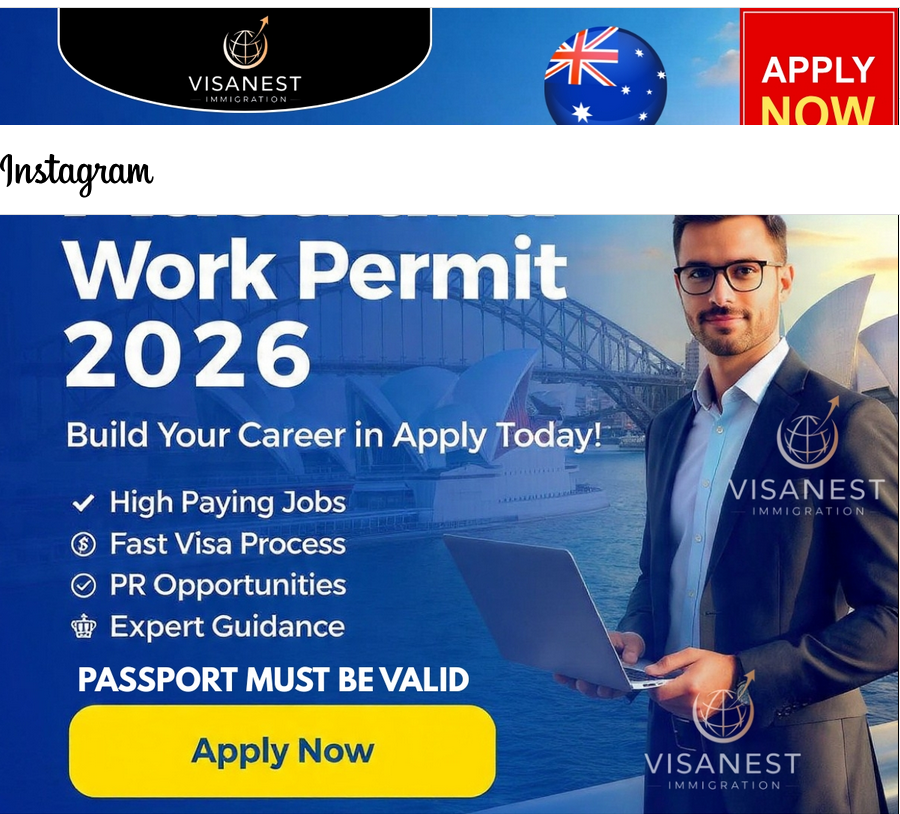
1. High-Paying Job Sectors & Salary Thresholds
To maximize your High RPM potential, focus on sectors where the Australian government has raised the minimum income threshold. In 2026, the Temporary Skilled Migration Income Threshold (TSMIT) is set at $73,150 AUD (excluding superannuation).

Occupation Sector Avg. Annual Salary (AUD) Demand Level
Cyber Security & AI $115,000 – $195,000 Very High
Healthcare (Nurses/Doctors) $88,000 – $220,000 Critical
Civil & Mining Engineers $98,000 – $170,000 High
Construction & Trades $75,000 – $130,000 High
Early Childhood Educators $72,000 – $105,000
2. Step-by-Step Application Process
Following a strict legal guideline is essential to avoid visa rejection. Here are the 5 core steps:
Step 1: Skills Assessment: Verify your qualifications through authorities like ACS (for IT), Engineers Australia, or VETASSESS.
Step 2: English Proficiency: Achieve a “Superior” score in PTE (79+) or IELTS (8.0) to gain 20 extra points for PR.
Step 3: Expression of Interest (EOI): Submit your profile via the SkillSelect portal.
Step 4: State Nomination: Apply for Subclass 190 or 491 visas if you need extra points to reach the 2026 cutoff (usually 85-95 points).
Step 5: Visa Lodgement: Once invited, submit your medicals, police clearances, and pay the visa fees.
3. Financial Requirements & Visa Costs
Migrating to Australia requires financial planning. Budget for these high-value items:
Visa Application Charge: Approx. $4,750 AUD.
Skills Assessment: $500 – $1,400 AUD.
Health Insurance (OVHC): Mandatory for all visa holders.
Proof of Funds: It is recommended to have $5,000 – $10,000 AUD in savings for initial settlement.
4. Living Costs in Australia (2026 Estimate)
While salaries are high, the cost of living varies by city:
Rent (Sydney/Melbourne): $1,900 – $2,800 AUD/month.
Groceries: $450 – $700 AUD/month.
Transport: $150 AUD/month.
Many people assume the process is too complicated. In reality, it becomes much easier when broken into simple steps. This guide explains everything clearly—from visa types and eligibility to documents, fees, timelines, and approval tips.
Key Takeaways
- Australia does not usually use the term “work permit” separately; workers apply for a work visa.
- Many applicants need a sponsoring employer.
- Skilled occupations often have stronger opportunities.
- English ability may be important depending on visa type.
- Accurate documentation improves approval chances.
- Some work visas may lead to long-term residency options.
Why Work in Australia?
Imagine earning a competitive salary while living in a safe, beautiful country known for beaches, modern cities, and career growth.
Australia attracts workers because of:
- Strong wages compared with many countries
- Worker rights and fair pay laws
- High demand in skilled sectors
- Multicultural society
- Clean environment and healthcare system
- Long-term migration pathways for eligible workers
Australia also faces labor shortages in healthcare, trades, agriculture, hospitality, and technology.
What Is an Australia Work Permit Visa?
Many people search for “Australia work permit,” but in practice, Australia mainly issues work visas rather than a separate permit.
This means if you want to work legally in Australia, you generally apply for a visa that allows employment.
Common work-related visa pathways include:
- Employer-sponsored visas
- Skilled migration visas
- Temporary shortage visas
- Regional work visas
- Working holiday visas (for eligible nationalities)
The best option depends on your profession, age, qualifications, and whether an employer is sponsoring you.
Popular Australia Work Visa Types
Temporary Skill Shortage Visa
This pathway often helps employers hire foreign workers when suitable local workers are unavailable.
It is common in sectors such as:
- Healthcare
- Construction
- Hospitality
- Engineering
- IT
Skilled Independent Visa
This option may suit highly qualified workers who meet points-based criteria.
Employer Sponsored Permanent Pathways
Some workers later transition into permanent residency through sponsorship.
Regional Work Visas
Australia encourages migration to regional areas where skills shortages are stronger.
Working Holiday Visa
Young travelers from eligible countries may work while traveling.
Who Can Apply for an Australia Work Permit Visa?
Eligibility depends on the visa stream, but common factors include:
- Valid passport
- Relevant skills or qualifications
- Job offer (for sponsored visas)
- English language ability (in many cases)
- Health requirements
- Character requirements
- Financial readiness
- Genuine intention to follow visa conditions
Each applicant’s case is different.
Australia Work Permit Visa Application Process Step by Step
Let’s make it simple.
Step 1: Choose the Right Visa Type
This is the foundation of success.
For example:
- A chef with employer sponsorship may choose a sponsored visa.
- A software engineer with high points may explore skilled migration.
- A farm worker may use a temporary labor route if available.
Choosing the wrong visa wastes time.
Step 2: Check Occupation Demand
Australia uses occupation lists for many skilled pathways.
Popular in-demand jobs often include:
- Nurses
- Electricians
- Carpenters
- Software engineers
- Chefs
- Teachers
- Mechanics
- Aged care workers
If your occupation is listed, opportunities may improve.
Step 3: Get a Job Offer (If Required)
Many visas need employer sponsorship.
For example, Rahul, an experienced chef, applied to restaurants in Brisbane. After interviews, one restaurant offered sponsorship because they struggled to find experienced staff locally.
That offer helped him proceed.
